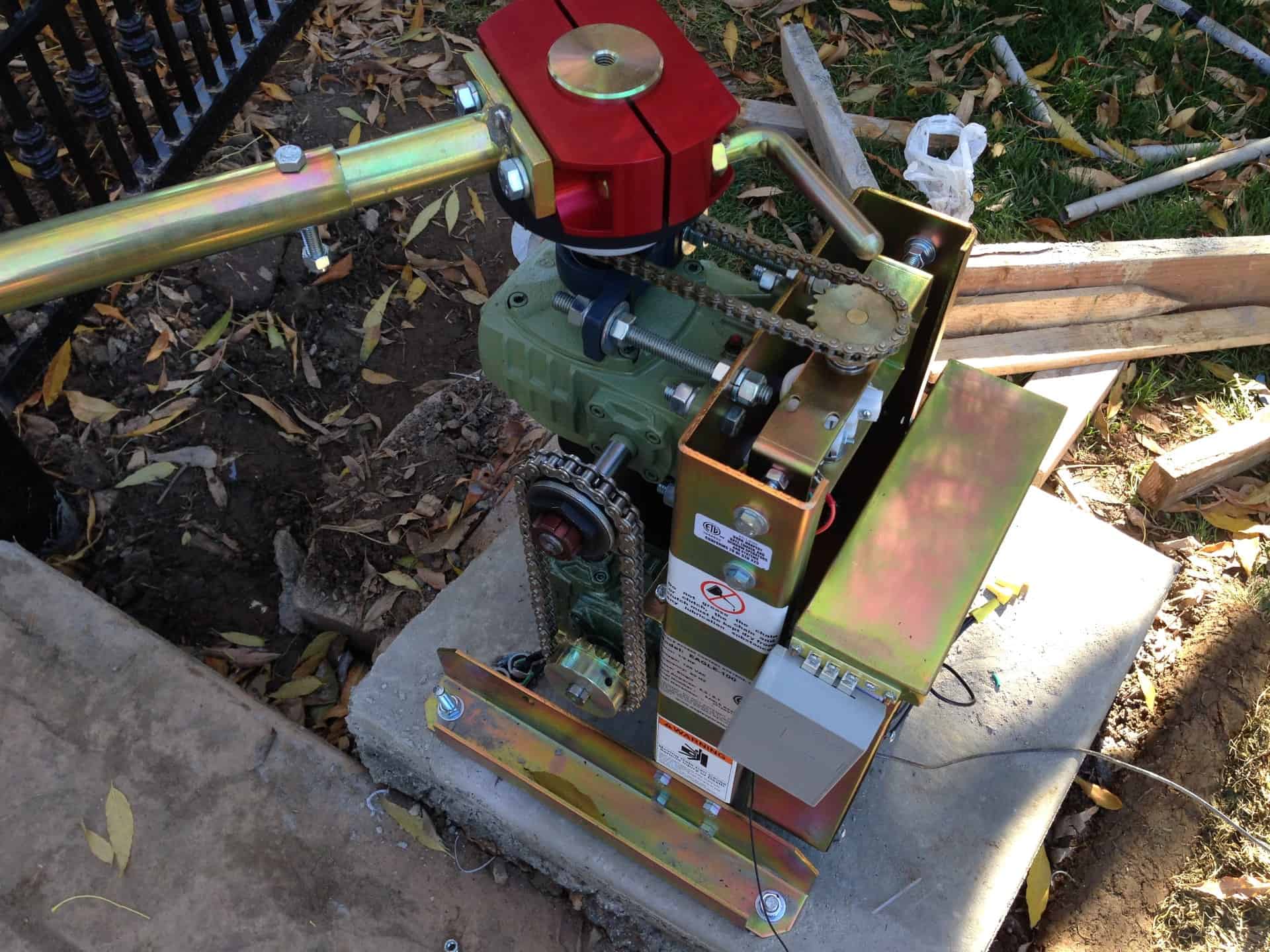

TL;DR: To open an automatic gate manually, locate the manual release mechanism on the gate motor housing, insert the override key or lever, and turn it to disengage the gate motor from the gate. Once the manual release is activated, the gate can be pushed or slid open by hand. The process takes 2–5 minutes and applies to all electric gate types – sliding gates, swing gates, and underground gate openers.
If you don’t have the key, see the Without a Key section below.
Before You Start: Safety First
Modern electric gates are controlled by powerful gate motors, and the gates they operate can be very heavy. Before attempting manual operation of any automatic gate, take these safety precautions:
- Ensure the area is clear – no vehicles, people, or obstacles in the gate’s path or arc of movement
- Disable the gate motor’s power supply – most automatic gate systems have a master switch inside the control box. Isolating power at the main isolation switch prevents the gate motor from restarting unexpectedly while you’re working near it
- If you’re not confident around electrical components – leave the wiring alone and focus only on the mechanical manual release
- Secure the gate after opening – once disengaged from the gate motor, the gate will move freely. In windy conditions, tie it back to prevent it swinging or rolling uncontrolled
- Familiarise yourself with the manual release mechanism before an actual emergency occurs – doing a dry run in daylight, without time pressure, means you’ll know exactly what to do when power fails at night or during a storm. It also confirms the release mechanism is working smoothly before you need it
- Keep your manual release key somewhere accessible – store it in a known location such as a key hook near your internal door or inside the gate’s control box. An inaccessible manual release key during a power outage defeats the purpose of having one
If you’re unsure about any of the steps above or aren’t comfortable working near the gate motor, Gate Gurus’ repairs team can assist – it’s always better to call a professional than risk damaging the mechanism or injuring yourself.
Types of Automatic Gates
Electric gates used on residential and commercial properties generally fall into three gate types, each with a slightly different manual release process:
- Sliding gates – move horizontally along a track, driven by a rack-and-pinion gear system in the gate motor. The motor unit sits alongside the gate near the track.
- Swing gates – open inward or outward, driven by either a swing arm motor or a ram motor mounted at the gate post. Double swing gates have two motors.
- Underground gate motors – concealed below ground near the gate post, used where a discreet electric gate installation is required.
Barrier gates are another common type used on commercial properties and car parks, though these typically have simpler manual release systems.
Most automatic gates – regardless of type – come with a manual override feature as a standard safety requirement. Understanding how these gate systems work before an actual emergency makes manual operation much faster and more confident.
Find your gate type below.
Opening a Sliding Automatic Gate Manually
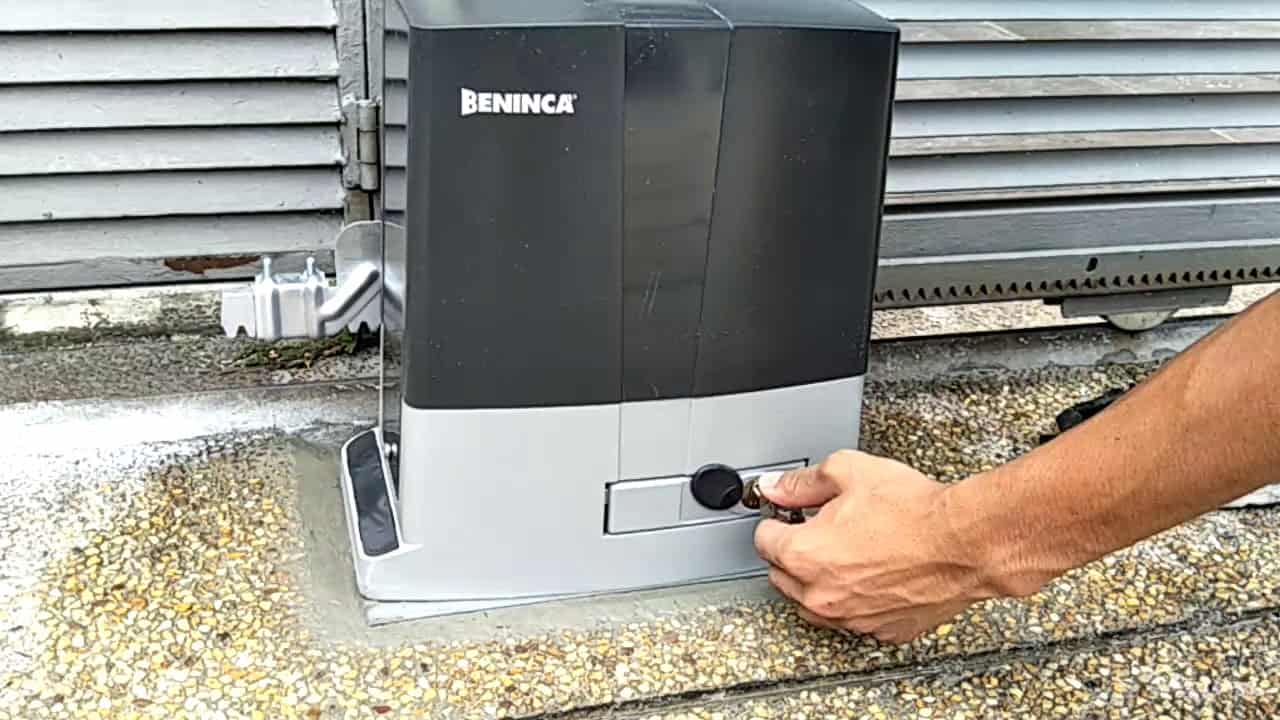
Sliding gates are one of the most common electric gate types. Here’s how to open a sliding gate manually:
- Locate the gate motor housing – the sliding gate motor sits in a plastic or metal box alongside the gate, usually at ground level near the track.
- Find the manual release mechanism – locate the manual release on the motor housing, typically a keyhole sometimes hidden behind a small cover or flap. This is where your manual release key is inserted.
- Insert the manual release key and unlock – turn the key to open the latch or access door on the housing. Some gate openers have a lever or knob behind this door; others require a hex key to turn a recessed screw.
- Disengage the gate motor – turn the key, lever, or manual release lever as indicated near the mechanism. You’ll often feel or hear a click when the gate motor releases from the gate’s rack, confirming the gate is free.
- Slide the gate open by hand – apply steady pressure. Don’t apply excessive force. If the gate is unusually stiff, check the release mechanism is fully disengaged before trying again.
Opening a Swing Automatic Gate Manually
Swing gates use one of two motor types – swing arm motors or ram motors. The manual release process is slightly different for each.
Swing Arm Motor
The arm mechanism on a swing automatic gate connects the gate motor body to the gate leaf, usually near the gate post.
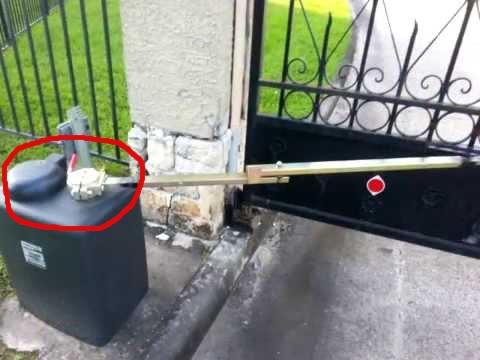
- Locate the motor arm – the arm mechanism runs from the gate motor to the gate leaf, near the hinge point.
- Find the manual release – on most swing gate openers, this is at the top of the gate motor housing, covered by a protective cap. Remove the cap to reveal a handle or manual release lever.
- Pull or turn the manual release lever – the direction should be marked near the lever. This disconnects the arm mechanism from the gate motor, allowing the gate to move freely. Older swing gate motors may be stiff – use a length of pipe over the handle for extra leverage rather than applying excessive force or striking it.
- Carefully push or pull the gate open – support the articulated arm as you move the gate to avoid it swinging back against the gate motor body.
- Double swing gates – repeat the full manual release process for the second gate motor on the other side.
Ram Motor
Swing gates with a ram motor have a slightly different manual release mechanism, typically located on or near the motor body.
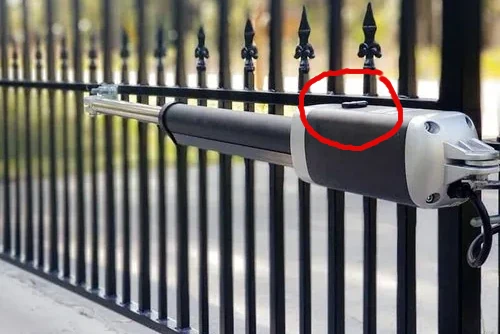
- Locate the manual release – this is usually on top of the ram motor, but may be on the side or underneath depending on the gate model and brand.
- Insert the manual release key and turn – the access cover should swing open. As with sliding gates, some gate openers require an additional step: pulling a lever, turning a knob, or using a hex key.
- Listen for the click – this confirms the gate is released from the gate motor and can move freely by hand.
- Double swing gates – repeat for the second gate motor.
Opening an Underground Gate Motor Manually
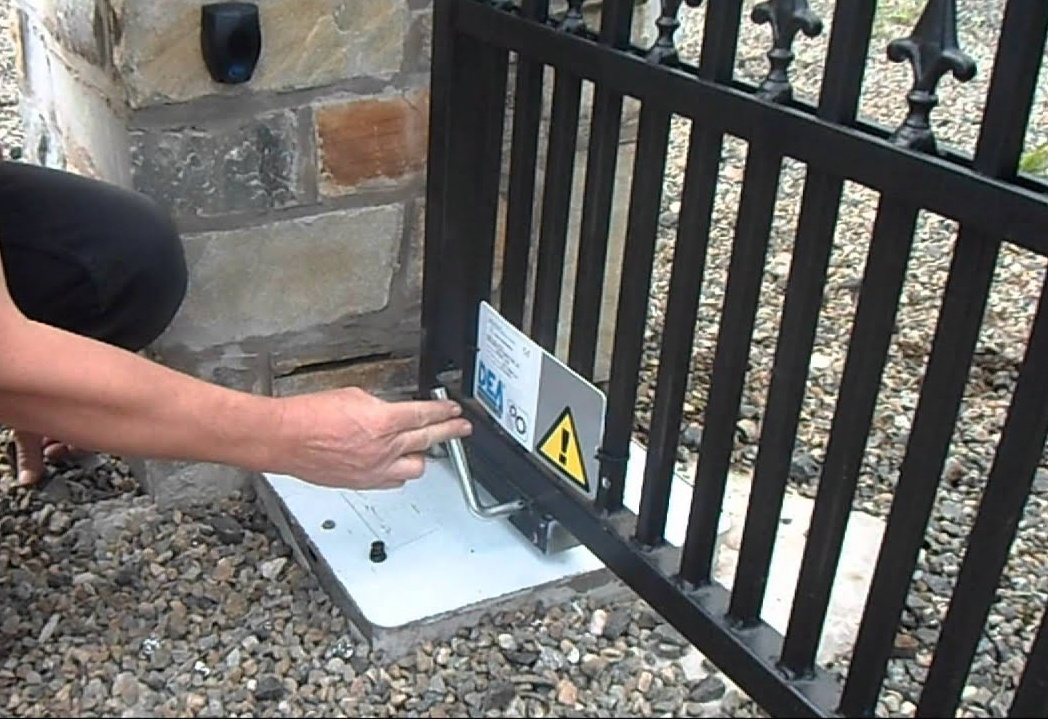
Underground gate openers are the most discreet type of electric gate installation, but the manual release process is straightforward once you know where to look.
- Locate the manual release mechanism – on underground gate motors, the release mechanism is usually found on the underside of the gate near the gate post it hinges from. It may be covered by a rubber or plastic plug.
- Get the correct key – underground gate openers typically use a large hex or allen key with a handle rather than a standard gate key.
- Insert and turn – start with the handle closest to the gate post and turn it away from the post toward the centre of the gate. Check your user manual or manufacturer’s user manual if unsure of the correct direction for your gate model.
- Apply steady leverage if needed – if the release mechanism hasn’t been used in a long time it may be stiff. Place a pipe over the handle for extra leverage rather than applying excessive force.
- Open the gate by hand – once you feel or hear the release click, the gate will move freely. Carefully push the gate to the open position.
Opening an Automatic Gate Manually Without a Key
If you can’t locate the manual release key, work through these steps before calling a gate specialist:
Check the control box first
Many electric gate installations store the manual release key inside the electrical control box near the gate motor. Open the control box – usually with a standard key or screwdriver – and check for a key stored inside.
Look for a secondary release
Some automatic gate systems have a secondary manual release – a lever, pull cord, or hex key slot – that doesn’t require the main override key. Check around the gate motor housing for any additional release points or an emergency release mechanism.
Check if power can be restored
If the electric gate refuses to open due to a power outage and the manual release system is locked, restoring power may allow the gate motor to operate normally again. Check your switchboard for a tripped circuit breaker before attempting manual override.
Try a hex key
Some gate openers – particularly ram motors – have a hex screw release accessible without the dedicated gate key. A standard hex key set may work. Check the motor housing carefully before applying force.
Contact the manufacturer or installer
If you cannot locate the key or alternative release, contact your gate’s manufacturer or installer. They can advise on a replacement manual release key specific to your gate model, which is often faster and cheaper than a full callout.
Call a gate specialist
If none of the above works, don’t try to force the gate open. Electric gate motors are strong and the manual release system is designed to resist force. Attempting to force it can damage the gate motor, the gate structure, or the mounting – turning a lockout into an expensive gate repair. Gate Gurus can assist with emergency gate access across Melbourne.
Re-engaging the Gate Motor after Power Restoration
- Once power is restored or the fault is resolved, re-engaging the gate’s automatic operation is the reverse of the manual release process:
- Move the gate back to its closed position by hand.
- Reverse the manual release procedure – turn the key, lever, or hex key back to the locked position to re-engage the gate motor.
- Remove the manual release key.
- Test that the gate motor is locked back in by trying to push the gate open manually – if it resists, the gate is re-engaged correctly.
- Restore power at the switchboard or control box.
- Stand clear of the gate’s arc of movement and test using your remote control to confirm the gate’s automatic function has resumed normally.
Troubleshooting: Manual Release Not Working
Release mechanism is stiff or won’t turn
This is common on gate openers that haven’t been manually released in years. Do not strike the mechanism or apply excessive force. Slide a length of pipe over the release handle to gain additional leverage and apply steady pressure. This is also a sign the manual release needs lubrication – include it in your next service.
Release mechanism turns but gate still won’t move freely
The gate motor may not have fully disengaged. Check that the release mechanism has been turned the full required distance – some gate openers require a full 180° turn to fully release. Also check the gate itself for physical obstructions: debris under a sliding gate or a bent track are common causes.
Key doesn’t fit or is the wrong key
If the electric gate has changed ownership or been modified, the manual release key may have been lost or replaced. A gate specialist can often supply or rekey the override lock without replacing the full gate motor.
Gate motor malfunctions and release won’t engage
In rare cases a gate motor failure can lock the release mechanism in place. This requires a professional – do not attempt to dismantle the gate motor housing.
Gate moves uncontrolled after manual release
This usually indicates a separate mechanical issue – a broken spring on a swing gate or a failed wheel or guide on a sliding gate. Secure the gate in place and call a gate specialist before attempting further manual operation.
Battery backup failures
Some automatic gate systems use battery backup to allow normal remote control operation during a power outage, avoiding the need for manual operation entirely. If your gate’s battery backup isn’t working when it should be, have the battery tested and replaced as part of your regular service.
After the Emergency: Inspect Your Gate
Once the gate is back on automatic operation, inspect it for any issues caused during manual operation or the original fault:
- Sliding gates: Check rollers and track are clean and undamaged. The rack and gear should mesh smoothly with no debris caught in the teeth.
- Swing gates: Check hinges are solid and not stressed. The arm mechanism or ram should connect and move without binding.
- All gate types: Check for any visible cable damage near the gate motor. Run the gate through a full open/close cycle and listen for unusual noises.
- Remote control and keypads: Test all remote controls work correctly after power restoration. If your remote control needs reprogramming, see our gate remote programming guide.
If you’ve had to manually operate your gate, it’s worth having the underlying fault properly diagnosed. What seems like a simple power issue can sometimes indicate a failing motor or damaged wiring. Gate Gurus handles all types of automatic gate repairs across Melbourne’s south-east.
Maintaining Your Automatic Gate
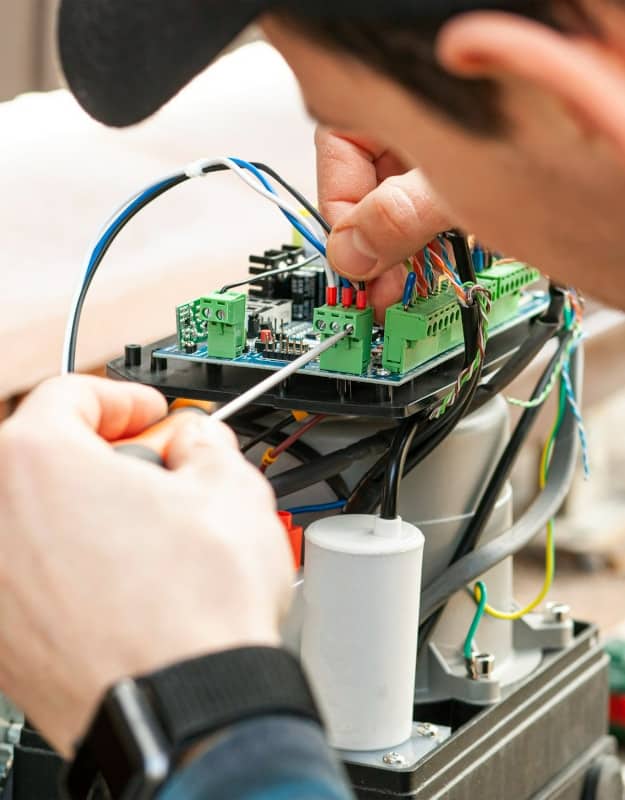
Regular maintenance is the best way to avoid gate motor failures and ensure your manual release mechanism works when you need it. A seized manual release during a power outage is almost always a preventable problem.
A yearly inspection should include:
- Lubrication of all moving parts – hinges, rack, rollers, arm pivot points, and the manual release mechanism itself
- Testing the manual release mechanism under no pressure, to confirm it operates smoothly before an actual emergency
- Checking and testing the battery backup system
- Inspecting wiring and connections near the gate motor for wear or corrosion
- Checking safety features including sensors and auto-reverse function
- Confirming the manual release key is accessible and stored in a known location
For high-use gate systems, a twice-yearly inspection is recommended. If you spot anything wrong during your checks, it’s best to have a gate maintenance service take care of it – most issues are minor and inexpensive when caught early.
Frequently Asked Questions
Do all automatic gates have a manual override?
Yes. Every electric gate motor – sliding, swing arm, ram, and underground – is required to have a manual release mechanism as a safety feature of any automatic gate system. This emergency release mechanism and the corresponding gate key should have been provided at the time of electric gate installation.
How do I open an electric gate when there is no power?
Use the manual release mechanism on the gate motor. Locate the manual release on the motor housing, insert the override key, disengage the gate motor, then push or slide the gate open by hand. Full instructions by gate type are above. Most electric gates are straightforward to open manually once you know where the release mechanism is located.
Can I open an automatic gate without a key?
Possibly. Check the electrical control box for a spare manual release key, look for a secondary hex key release on the gate motor, or check if power can be restored to allow normal gate operation. If none of these work, contact the manufacturer or installer for a replacement key, or call a gate specialist – forcing the gate risks damaging the gate motor or gate structure.
Can electric gates be forced open?
You should not attempt to force an electric gate open. The manual release system is designed to resist force. Forcing the gate can bend the gate frame, damage the gate motor arm, strip the rack and gear on sliding gates, or stress the hinge points on swing gates – potentially resulting in a far more expensive repair than the original fault.
What do I do if my automatic gate won’t open at all?
Work through the following:
- Check the remote control battery and try reprogramming.
- Check the circuit breaker at your switchboard – a tripped breaker is a common cause.
- Check the gate’s safety features – clean the sensor lenses and check for obstructions.
- Check for visible damage near the gate motor.
- If none of these resolve it, use the manual release and call a gate specialist.
How do I open an electric gate from inside?
From inside the property you have direct access to the gate motor housing. The manual operation process is identical to the instructions above – locate the manual release mechanism on the gate motor, insert the key, disengage, and open the gate by hand.
Can I open my electric gate with my phone?
Yes, if you have a smart controller or intercom fitted to your gate system. These devices allow you to control access via a smartphone app, GSM call, or web interface, providing vehicle access even without a remote control. If your electric gate system doesn’t currently have this capability, it can be added to most existing gate openers.
How often should I test the manual release on my automatic gate?
At least once a year, ideally as part of a broader gate service. Testing the manual release before an actual emergency confirms it operates smoothly and that the mechanism hasn’t seized. It also ensures you know exactly where the release mechanism is located and how to operate it under pressure.
Gate Still Not Working?
If your electric gate isn’t operating correctly after manual override, or if you need the manual release serviced, a gate motor repaired, or your manual release key replaced, Gate Gurus can help. We’re a gate specialist team servicing all makes and models of automatic gate openers across Melbourne’s south-east.
Call us on (03) 9052 4903 or request a quote here.