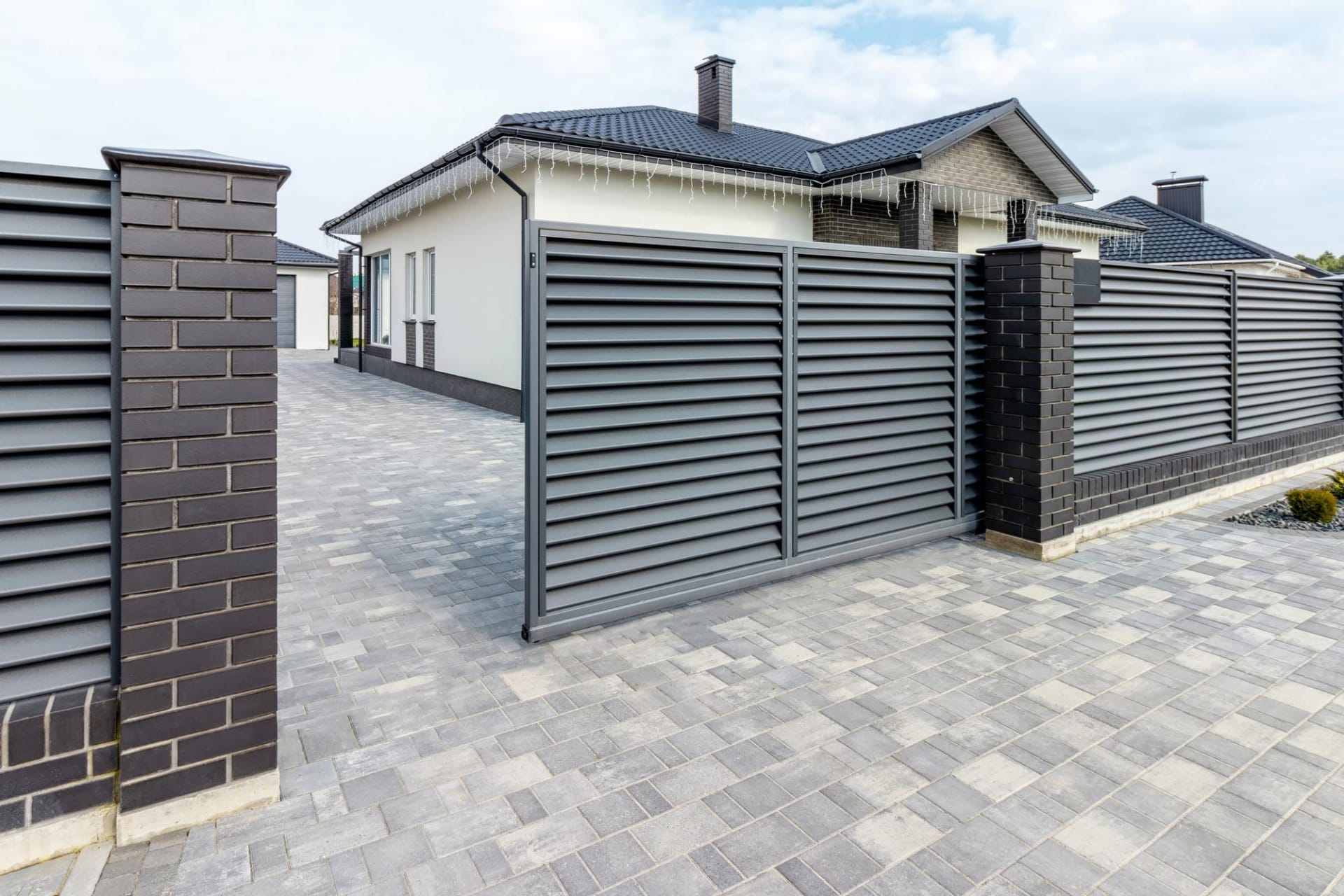
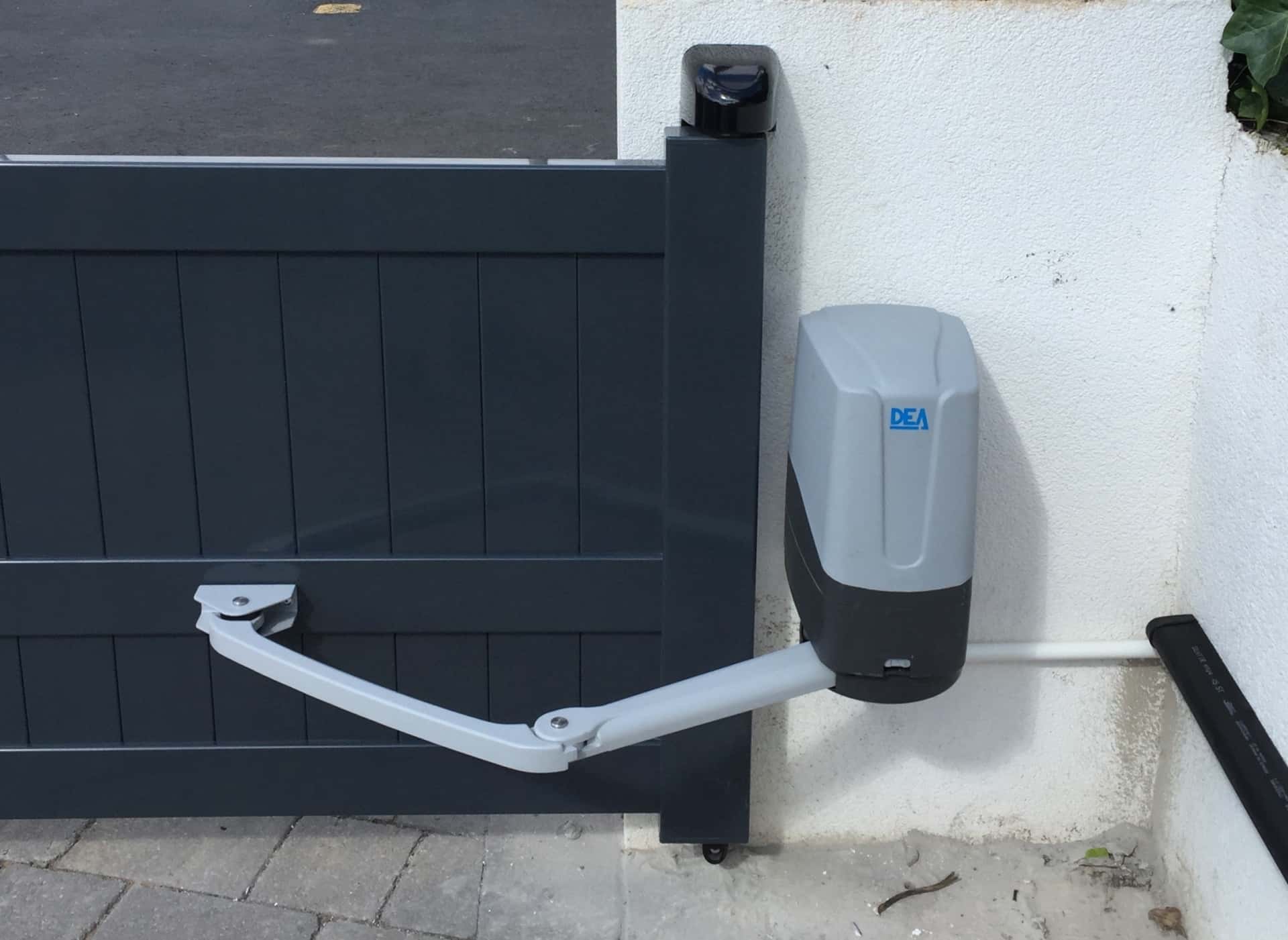

The phrase “automatic gate opener” actually covers four very different machines for four very different gate types. Choosing the wrong one is how driveways end up with motors that overheat by year three, sliding gates that bind after the first wet winter, or swing arms that rust off their brackets within five years on a coastal block.
This guide breaks the category down by gate type (sliding, swing, boom and telescopic), names the brands installed across Australia, and explains the buying criteria that actually matter. It draws on what Gate Gurus’ technicians see day to day across Melbourne, from beachside Brighton swing gates to commercial sliders behind warehouses in Epping. By the end you should know what to ask for, what to ignore, and where the real cost drivers sit.
Key takeaways
- Match the opener to the gate first, the brand second. Sliding, swing, boom and telescopic gates all use different motors, and you cannot swap between them.
- Gate weight and length set the minimum motor spec. A motor rated for 600 kg will fail early on a 700 kg gate, even if everything else looks right.
- Italian brands (BFT, FAAC, Came, NICE) and Australian-supported brands (Centurion, ATA) dominate quality residential installs. Cheap unbranded kits are usually false economy.
- Solar suits remote sites and properties without nearby mains. Mains power with battery backup is still the default for typical suburban driveways.
- Smart phone control, keypad access and intercom integration are now standard on most quality openers. Check compatibility before buying.
- Professional installation is required for compliance with Australian Standard AS 5007 (force limits and obstacle detection). DIY only makes sense on low-traffic, low-risk gates.
How an automatic gate opener works
At the simplest level, an automatic gate opener is a motor, a control board, and a way for you to tell it to open. The trigger comes from a remote, keypad, intercom button or phone app.
After that, the differences are mechanical. Sliding gate motors use a gear that drives a toothed rack along the bottom of the gate. Swing gate motors use a ram (linear actuator), an articulated arm (a crank), or an underground motor beneath the pivot.
The other split is electrical. Older 240V AC motors are powerful but draw mains current and do not run during outages. Modern 24V DC motors, now standard on most quality residential gear, run cooler, accept battery backup as a bolt-on, and support soft-start and soft-stop for longer mechanical life. For residential and light commercial, 24V DC is the default.
Sliding gate openers
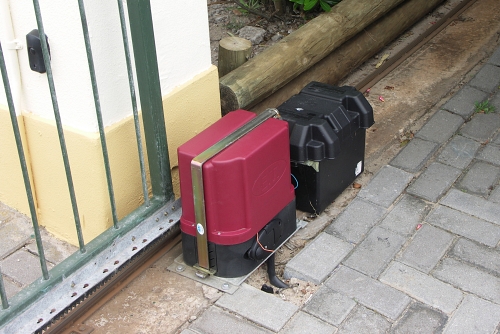
A sliding gate opener moves the gate horizontally along a track, parallel to the boundary. They suit driveways with no swing-in clearance, sloped driveways where a swing arc would not work, and heavier gates where pier-mounted swing motors would struggle.
When a sliding opener is the right fit
Pick sliding when your driveway is steep, when there is little clear space behind the gate line, or when the gate is heavy. Sliding gates also handle wind better, which matters on exposed sites near the bay.
Residential picks by use case
For light residential gates under 500 kg, an entry-level Australian-supported motor (the ATA NeoSlider class is a common pick) does the job at a reasonable price. For an all-rounder that suits most suburban driveways, a mid-tier motor like the Centurion D5 Evo class is widely installed because parts are easy to source and local service is strong. For heavy gates, longer runs, or top-end build quality, Italian sliders like the BFT Deimos Ultra class are the usual call.
These are use-case fits, not endorsements. The right motor depends on your gate, driveway and budget.
Specs that matter
Read the motor’s gate weight rating against the actual weight of your gate, not the empty steel-frame weight. Powder coat, infill, anti-climb spikes and rust all add up. Check the duty cycle: residential motors handle 30 to 50 percent duty. For voltage, 24V DC is the modern default. For exposure, look for IP44 or higher on anything mounted outside.
Common failures we see
Track flooding in storm season is the classic Melbourne issue: water pools in low spots, gear racks rust from underneath, and the motor strains to drive a binding gate. Misaligned racks chew teeth. Cheap nylon racks deform in summer heat and skip teeth at the worst moments.
Swing gate openers
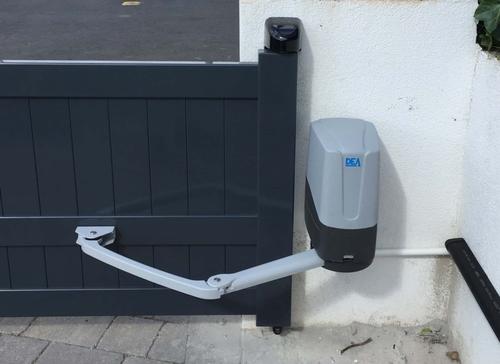
Swing gate openers suit traditional driveways with wider entrances, lighter gates, and proper masonry or steel piers to mount the motors. They look more elegant on heritage frontages and they are usually cheaper to retrofit when an existing manual gate is already swinging.
When a swing opener is the right fit
Pick swing when your driveway is wide, your gates are light to medium weight, and you have solid pier construction either side. They are also the natural choice when you are automating an existing manual swing gate.
The three actuator styles
Ram (linear) actuators are the most common: a sealed piston that extends and retracts to push the gate. They suit standard pier mounts and most residential gates. Articulated (crank-arm) actuators use a folding arm and suit gates where the pier sits well behind the hinge line, because they can reach around obstructions. Underground motors hide in a sealed pit beneath the gate pivot, which looks tidy but costs more to install and to service when something fails.
Brand picks by use case
For DIY-friendly retrofits on lighter gates, the NICE Aria class is a common pick because the kits are well documented and parts are easy to get hold of. For hassle-free professional installs on standard residential gates, the Merlin Swing L 300 class sits in the sweet spot. For heavy gates, high cycle counts or harsher exposure, FAAC and BFT swing actuators are the usual recommendation.
Again, these are use-case fits. Spec your gate first, then look at the class of motor that suits.
Common failures we see
On coastal installs, worn pivot bushings are the most common cause of dragging gates. Articulated arms bind from rust where the joint is exposed to salt air. Underground motor pits flood when the drainage is wrong, which kills the motor and the control board in one go.
Boom gates and commercial-grade openers
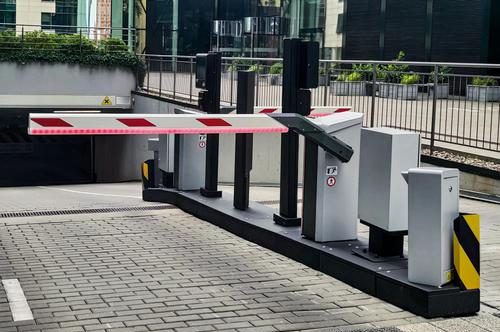
Boom gates are not a residential product. They are designed for car parks, strata complexes, controlled access points and commercial sites where the priority is traffic control rather than perimeter security. The bar lifts and lowers, but it does not stop a determined intruder. If security is the goal, you want a fence and a gate, not a boom.
When a boom gate is appropriate
Boom gates suit high-cycle access control: strata car parks, retail loading bays, office complexes, public parking and commercial yards. They are quick to operate, easy to integrate with intercom and card systems, and cheaper per cycle than a full sliding gate over the long run.
Commercial duty-cycle ratings
Residential gate motors are rated for intermittent duty: a typical home gate cycles 6 to 20 times a day. Commercial boom gates cycle hundreds of times daily, so they are built for continuous duty with hardier motors and heavier gearing. Spec a residential motor on a commercial site and you will be replacing it within a year or two.
Common boom-gate brand families in Australia
Centurion, BFT, ATA’s commercial range and FAAC’s commercial range cover most of the boom installs across Melbourne. Within the BFT range, Ares, Icaro and Oberon are familiar names on car-park and strata installs. The right pick comes down to traffic volume, beam length and integration with the existing access control system.
Telescopic and specialty gate openers

Telescopic gates are rare on residential blocks but useful in tight commercial settings where a standard sliding gate would not have room to retract. The gate splits into two or three overlapping panels that slide on parallel tracks, so a 6 metre opening can fit into 3 metres of clear run.
You see them on warehouse boundary lines, narrow lanes and service yards where space is the constraint. Motors are typically commercial-grade sliding units, sometimes paired in a synchronised pair to drive both panels together. Telescopic systems cost more than a standard slider because there are more moving parts, more rollers and more alignment tolerances to maintain. For most homes, a sliding or swing gate will do the job. If your site genuinely cannot fit either, a telescopic install is worth getting a specialist to spec.
How to choose: the buying criteria that matter
Forget “best opener overall.” There is no such thing. The right opener is the one that matches your gate, your power situation, your access needs and your local compliance rules. Here is the order to think about it.
Start with the gate
Type first: sliding, swing, boom or telescopic. Then weight: get the gate weighed if you can, or estimate honestly from materials, infill and any retrofitted hardware. Then length and leaf count. Get this wrong and nothing else matters.
Power source
Mains power is the default for most suburban driveways. Adding a backup battery to a 24V DC mains kit is cheap insurance and gets you 10 to 50 cycles during a blackout. Full solar suits rural and acreage blocks where running mains to the gate is expensive. For most Melbourne homes, mains plus battery backup is the cleanest answer.
Access and control
Standard remotes still do most of the heavy lifting, but keypad entry, intercom integration and phone app control are all common on quality openers now. If you want app control, check whether the opener has it built in or needs a third-party module. GSM modules suit gates with no Wi-Fi at the entrance.
Compliance and safety
Australian Standard AS 5007 covers force limits and obstacle detection for powered gates. Compliance means the gate stops or reverses if it meets resistance, photocell beams across the opening, and force testing at commissioning. This is one of the main reasons DIY installs go wrong: passing AS 5007 properly takes specific test gear and working knowledge of the standard.
Warranty and serviceability
A 5-year warranty on a brand with no local parts supply is worth less than a 2-year warranty on a brand with stock in every Melbourne van. Look at parts availability and local service support before the warranty length on the spec sheet. When we get called out to motors that have failed in 2 to 3 years, the most common cause is undersizing: a kit rated for the gate’s empty weight, not the real weight including rust, retrofitted infill or anti-climb spikes.
Cost ranges in the Australian market
Gate opener cost splits into two parts: the motor or kit (a published retail price) and the installation (always quote-by-job). Treat these separately when you are budgeting.
Motor and kit supply-only ranges
Across Australian retailers, market-typical pricing for residential sliding kits sits around $850 to $2,000, and swing kits around $1,000 to $2,500. Premium Italian brands sit at the top of these ranges, entry-level Australian-supported kits at the bottom. These are widely visible across AU suppliers and represent retail supply-only pricing, not Gate Gurus pricing.
Installation is quote-by-job
Standard suburban installs and harder jobs sit at very different price points. The factors that push install cost up are: trenching across a driveway, running new mains to the gate, dual-leaf swing setups, intercom integration, photocell pairs, additional remotes, and any masonry or pier rework. Because every site is different, install pricing should always come as a fixed-price quote tied to your specific job, not a blanket figure pulled from a website.
For a quote on your gate, send a photo through to a local technician and you will get a realistic figure back without a paid callout.
Solar vs mains power
Solar suits properties where running mains to the gate is expensive or impractical: long driveways, rural acreage, sites without nearby power. A solar gate kit pairs a panel, a deep-cycle battery and a 24V DC motor. Sized correctly for the gate’s daily cycle count and the local sun hours, it will run for years without intervention, with the battery as the main wear part.
Mains power suits everything else. Most suburban driveways have power within easy reach, and the cost of a small mains run is trivial compared with sizing solar correctly. A mains kit with battery backup gets you the best of both: reliable everyday operation, plus a working gate during outages. For Melbourne’s typical weather and suburban density, mains plus battery backup is still the default.
Need help installing or replacing an automatic gate opener?
Gate Gurus has spent 20 plus years specialising in automatic gates, with technicians trained across NICE, Centurion, BFT, Came, FAAC, Boss and ATA. Send a photo of your gate for a fixed-price quote with no paid callout, and every install and gate repair is covered by a 5-year labour guarantee (conditions apply). Call (03) 9052 4903 or request a professional gate installation quote through the website.
Automatic gate opener FAQs
How do I match an automatic gate opener to my gate?
Start with gate type (sliding, swing, boom or telescopic), then weigh or estimate the gate as it stands, including any infill or retrofitted hardware. Add length and leaf count. Cross-check that figure against the motor’s published weight and length ratings, and pick a motor with margin to spare.
How long do gate opener batteries last?
Backup batteries on mains-powered kits typically last 3 to 5 years before they need replacement, depending on cycle count and climate exposure. Solar deep-cycle batteries vary more, with quality units lasting 4 to 7 years if sized correctly. Heat is the main killer, so shaded battery enclosures help.
Can I install an automatic gate opener myself?
You can install the hardware, but commissioning to AS 5007 (force limits, obstacle detection, photocells) requires test gear and standards knowledge most homeowners do not have. For low-traffic, low-risk gates, DIY can work. For anything heavy, public-facing or high-cycle, a qualified technician should handle it.
How much does it cost to install an automatic gate opener in Melbourne?
Install pricing is job by job, not a fixed list. The main factors are gate type, weight, single vs dual leaf, whether new mains needs running, and whether you add intercom or photocells. Send a photo of the gate to a local installer for a fixed-price quote.
How do I open my automatic gate manually during a power outage?
Almost all quality openers (NICE, Centurion, BFT, Came, FAAC, Boss, ATA) have a manual release operated by a key. Find the release on the motor housing, turn the key, and the gate disengages from the drive so you can push it by hand. Keep the release key accessible.
Can I retrofit an automatic opener to my existing manual gate?
Yes, in most cases. The main checks are gate condition (hinges, frame, alignment), pier strength for swing setups, and a level run for sliding gates. If the existing gate is sound, retrofitting an opener is usually cheaper than replacing it. Gate Gurus offers this across Melbourne.
All prices mentioned are approximate guides based on typical Melbourne market rates and may vary depending on your specific situation.